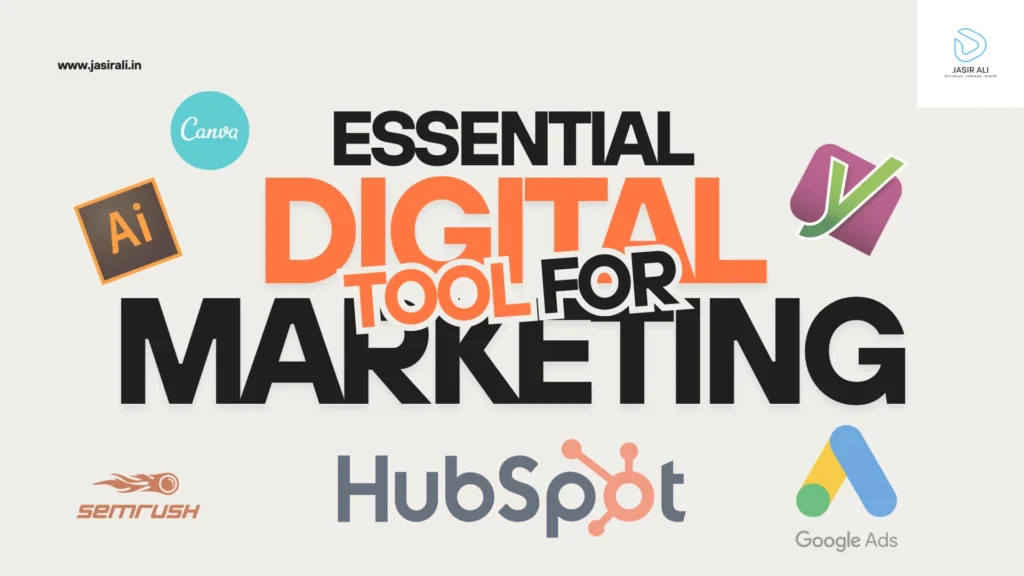
Breaking into digital marketing can feel overwhelming. With countless platforms, strategies, and technologies competing for your attention, knowing where to start is half the battle. The good news? Take it step by step—you don’t need to know everything right away. Success in digital marketing begins with understanding and leveraging the essential tools for digital marketing that professionals rely on daily.
Whether you’re launching your first campaign, building a personal brand, or transitioning from traditional marketing, this guide will walk you through the must-have tools that will set you up for success. These aren’t just nice-to-haves—they’re the foundation of effective digital marketing in today’s landscape.
Why the Right Tools Matter
Before diving into specific platforms, let’s address a fundamental question: why do tools matter so much in digital marketing?
Digital marketing is inherently data-driven and multi-channel. You’re managing social media, email campaigns, SEO efforts, paid advertising, and content creation—often simultaneously. Without the right tools, you’re essentially trying to build a house with your bare hands. The essential tools for digital marketing serve as force multipliers, allowing you to work smarter, measure results accurately, and scale your efforts efficiently.
The right toolkit enables you to automate repetitive tasks, gain actionable insights from data, collaborate with team members, and deliver personalised experiences to your audience. In a field where margins matter and competition is fierce, having these tools at your disposal isn’t optional—it’s essential.
Analytics and Data Tools: Your Marketing Intelligence
Google Analytics 4
No list of essential tools for digital marketing would be complete without Google Analytics. As the industry standard for web analytics, GA4 provides invaluable insights into how users interact with your website. You’ll discover which pages perform best, where visitors come from, how long they stay, and most importantly, what actions they take.
For new digital marketers, GA4 offers a treasure trove of data that informs every other marketing decision you make. Understanding your audience demographics, behaviour flow, and conversion patterns allows you to optimise your strategies based on real data rather than guesswork.
The platform’s latest iteration, GA4, introduces event-based tracking and cross-platform measurement capabilities, making it even more powerful for understanding the modern customer journey.
Google Search Console
While Google Analytics tells you what happens on your site, Google Search Console reveals how people find you through search engines. This free tool shows which keywords drive traffic to your site, your search rankings, click-through rates, and technical issues that might affect your SEO performance.
For digital marketers focused on organic growth, Search Console is indispensable. It provides direct feedback from Google about your site’s health and visibility, allowing you to identify opportunities for improvement and track your SEO progress over time.
SEO Tools: Dominating Search Rankings
SEMrush or Ahrefs
Professional SEO requires professional tools, and SEMrush and Ahrefs stand as the industry leaders. These comprehensive platforms are among the most essential tools for digital marketing when organic visibility is a priority.
Both platforms offer keyword research capabilities, allowing you to discover what your audience is searching for and identify opportunities with favourable search volume-to-competition ratios. They provide backlink analysis, helping you understand your link profile and discover link-building opportunities. Competitor analysis features let you peek behind the curtain at your competitors’ strategies, revealing their top-performing keywords and content.
Site audit functionality identifies technical SEO issues that might be holding you back, while rank tracking monitors your progress over time. For new marketers working with limited budgets, starting with one of these platforms—even at a basic tier—provides tremendous value.
Yoast SEO or Rank Math
If you’re running a WordPress site, these plugins are non-negotiable additions to your essential tools for digital marketing. They make on-page SEO accessible, providing real-time optimisation suggestions as you create content.
These tools analyse your content for keyword usage, readability, meta descriptions, title tags, and numerous other ranking factors. They essentially serve as an SEO mentor, guiding you toward best practices with every piece of content you publish.
Content Creation and Management
Content Management System (WordPress, HubSpot, or Webflow)
Your content management system serves as the structural foundation of your website and digital strategy. WordPress powers over 40% of the web and remains one of the most essential tools for digital marketing, offering flexibility, extensive plugin ecosystems, and complete control over your content.
HubSpot provides an all-in-one solution combining CMS with CRM and marketing automation capabilities—ideal if you want tight integration between your content and marketing efforts. Webflow appeals to designers and those who want visual development capabilities without sacrificing technical sophistication.
Choosing the right CMS depends on your technical comfort level, budget, and specific needs, but having a robust platform for publishing and managing content is fundamental to any digital marketing strategy.
Canva or Adobe Creative Cloud
Visual content drives engagement across every digital channel. Canva has democratised graphic design, making it one of the most essential tools for digital marketing professionals who need to create professional-looking graphics without a design degree.
With thousands of templates, stock photos, and intuitive drag-and-drop functionality, Canva enables you to produce social media graphics, infographics, presentations, and more in minutes. For marketers requiring more advanced capabilities, Adobe Creative Cloud remains the professional standard, offering Photoshop, Illustrator, and Premiere Pro.
Grammarly
Clear, error-free communication is non-negotiable in digital marketing. Grammarly serves as your personal editor, catching grammatical errors, suggesting style improvements, and ensuring your writing maintains the right tone for your audience.
Whether you’re crafting email campaigns, blog posts, social media updates, or ad copy, Grammarly helps maintain professionalism and clarity. The premium version offers advanced features like plagiarism detection and genre-specific writing suggestions, making it one of the essential tools for digital marketing content creators.
Email Marketing Platforms
Mailchimp, ConvertKit, or ActiveCampaign
Email remains one of the highest-ROI marketing channels, delivering an average return of $36 for every dollar spent. An email marketing platform is therefore among the most essential tools for digital marketing success.
Mailchimp offers an accessible entry point with generous free tier options, making it ideal for beginners. The platform provides email templates, basic automation, and audience segmentation capabilities. ConvertKit caters specifically to creators and bloggers, offering powerful tagging and segmentation features with a creator-friendly interface.
ActiveCampaign serves businesses ready for sophisticated automation, providing advanced workflows, CRM integration, and detailed analytics. Regardless of which platform you choose, email marketing capabilities are essential for nurturing leads, maintaining customer relationships, and driving conversions.
Social Media Management Tools
Hootsuite, Buffer, or Later
Managing multiple social media accounts manually is inefficient and unsustainable. Social media management platforms rank among the most essential tools for digital marketing, enabling you to schedule posts, engage with audiences, and analyse performance across multiple platforms from a single dashboard.
Hootsuite offers comprehensive management capabilities for numerous social networks, with robust analytics and team collaboration features. Buffer provides a cleaner, more intuitive interface with excellent scheduling capabilities and straightforward analytics.
Later specialises in visual-first platforms like Instagram, offering a visual content calendar that makes planning aesthetically cohesive feeds effortless. These tools save hours each week while ensuring consistent posting schedules—crucial for maintaining audience engagement.
Paid Advertising Platforms
Google Ads
For marketers working with paid search, Google Ads is unavoidable. As one of the most powerful essential tools for digital marketing, it provides access to billions of daily searches, allowing you to place your offerings directly in front of people actively seeking solutions.
The platform offers various campaign types—search, display, video, shopping, and app campaigns—each serving different objectives. The learning curve can be steep, but mastering Google Ads opens tremendous opportunities for immediate traffic and measurable results.
Facebook Ads Manager
Social media advertising has matured into a sophisticated channel capable of delivering remarkable targeting precision. Facebook Ads Manager (which also manages Instagram ads) stands as one of the essential tools for digital marketing professionals focused on social channels.
The platform’s targeting capabilities are legendary, allowing you to reach specific demographics, interests, and behaviours and even create lookalike audiences based on your existing customers. With various ad formats—from image and video to carousel and collection ads—you can craft campaigns optimised for different objectives, whether that’s brand awareness, lead generation, or direct sales.
Customer Relationship Management (CRM)
HubSpot CRM, Salesforce, or Zoho CRM
Understanding and managing customer relationships is fundamental to marketing success. A CRM system organizes contact information, tracks interactions, manages sales pipelines, and provides insights into customer behavior—making it one of the essential tools for digital marketing teams.
HubSpot CRM offers a robust free version that integrates seamlessly with HubSpot’s marketing tools, providing an excellent starting point for new marketers. Salesforce remains the enterprise standard, offering unparalleled customization and scalability. Zoho CRM provides a middle ground with strong functionality at accessible price points.
These platforms ensure no lead falls through the cracks and enable personalized communication at scale—critical advantages in competitive markets.
Marketing Automation Tools
HubSpot, Marketo, or ActiveCampaign
Marketing automation represents the evolution from manual, time-consuming processes to intelligent, scalable systems. These platforms are among the most transformative essential tools for digital marketing, enabling you to nurture leads, personalize customer journeys, and measure attribution across touchpoints.
Automation platforms allow you to create workflows triggered by specific actions—downloading a resource, visiting certain pages, or reaching particular scoring thresholds. This ensures prospects receive relevant communications at optimal times without requiring manual intervention for each interaction.
For new marketers, starting with basic automation through email marketing platforms like ActiveCampaign provides a foundation. As your sophistication grows, platforms like HubSpot and Marketo offer enterprise-level capabilities including advanced lead scoring, multi-channel campaigns, and sophisticated attribution modeling.
Project Management and Collaboration
Asana, Trello, or Monday.com
Digital marketing involves juggling multiple campaigns, deadlines, and stakeholders. Project management tools have become essential tools for digital marketing teams to maintain organization, ensure accountability, and deliver projects on time.
Asana offers robust task management with timeline views, dependencies, and workflow automation. Trello provides visual boards that make project status immediately apparent—perfect for content calendars and campaign planning. Monday.com delivers extensive customization options and powerful automation capabilities.
These platforms transform chaotic marketing operations into streamlined, transparent processes where everyone understands their responsibilities and deadlines.
Building Your Essential Marketing Stack
With so many options available, how do you actually build your toolkit as a new digital marketer?
Start with the fundamentals: analytics (Google Analytics and Search Console), basic SEO tools, a content management system, and an email marketing platform. These core essential tools for digital marketing provide the foundation for virtually every strategy you’ll implement.
As you gain experience and identify specific needs, expand strategically. If social media becomes a focus, invest in management tools. When paid advertising enters the mix, allocate budget for ad platforms. As your contact database grows, CRM becomes increasingly valuable.
Remember that tools are enablers, not magic solutions. The most essential tools for digital marketing only deliver results when paired with sound strategy, creative thinking, and consistent execution. Focus on mastering a core toolkit before expanding to avoid the “shiny object syndrome” that plagues many new marketers.
Free vs. Paid Tools: Finding the Right Balance
Budget constraints are real, especially when starting out. Fortunately, many essential tools for digital marketing offer free tiers or trials.
Google’s suite (Analytics, Search Console, Google Ads) is free to access, though you’ll pay for ad clicks. Canva, Mailchimp, HubSpot CRM, and many social media management tools offer substantial free versions. These provide excellent starting points without financial commitment.
As your skills develop and marketing efforts scale, investing in paid tools becomes worthwhile. Professional SEO platforms like SEMrush, advanced automation capabilities, and premium social media management features deliver ROI that justifies their cost. The key is growing your toolkit in proportion to your needs and budget.
Staying Current in a Changing Landscape
Digital marketing tools evolve rapidly. Platforms introduce new features, entirely new tools emerge, and industry standards shift. What counts as essential tools for digital marketing today may look different in two years.
Commit to continuous learning. Follow industry blogs, participate in marketing communities, attend webinars, and experiment with emerging platforms. This keeps your skills sharp and ensures you’re leveraging the best available tools for your objectives.
Wrapping Up: Your Digital Marketing Toolkit Journey
Building a successful digital marketing career starts with assembling the right technology stack. The platforms and software we’ve explored throughout this guide form the backbone of modern marketing operations, enabling you to track performance, create compelling content, reach your audience, and drive meaningful business results.
Your journey doesn’t require purchasing every available solution on day one. Instead, focus on building expertise with core platforms first—analytics, content creation, and audience engagement tools. As your capabilities mature and your marketing initiatives expand, you can introduce more sophisticated solutions that address specific challenges and opportunities.
What separates thriving marketers from struggling ones isn’t the size of their software budget. It’s their ability to deeply understand their chosen platforms, extract actionable insights from available data, and consistently deliver value to their target audiences. Tools serve as amplifiers of talent and strategy, not replacements for them.
Your marketing technology should work for you, enhancing your natural creativity and strategic vision. Build your stack thoughtfully, invest time in genuine mastery, and watch as these essential tools for digital marketing transform your ability to connect with audiences and achieve your professional goals.
Frequently Asked Questions (FAQ)
Which tools should newcomers to digital marketing prioritize first?
Newcomers benefit most from beginning with Google Analytics for tracking website performance, Google Search Console for monitoring search visibility, WordPress or another CMS for content publishing, Mailchimp or similar platforms for email outreach, and Canva for creating visual assets. This core collection addresses the fundamental needs of audience analysis, content development, and campaign execution while remaining accessible to those without extensive technical backgrounds or large budgets.
1. What’s a realistic budget for marketing software and platforms?
Investment in marketing technology scales with your business maturity and objectives. Those just starting out can operate effectively spending nothing to $100 per month by utilizing free tiers from Google, Mailchimp, Canva, and HubSpot. Growing businesses typically allocate $200-$500 monthly to access professional features like comprehensive SEO analysis through SEMrush or Ahrefs ($99-$199/month), enhanced email capabilities, and robust social scheduling. Larger enterprises often commit over $1,000 monthly for complete automation suites, advanced CRM systems, and enterprise analytics.
2. Is it necessary to use different software for every marketing channel?
The answer varies based on your specific situation. Many comprehensive platforms like HubSpot bundle email, social media, content management, and customer relationship features into unified systems. Alternatively, channel-specific tools frequently offer deeper functionality and specialized features for particular marketing activities. The optimal strategy involves starting with integrated solutions for simplicity, then supplementing with specialized tools as certain channels become increasingly important to your overall marketing mix.
3. How do free and premium marketing tools differ in practice?
Free tool versions generally impose limitations on usage volume, feature access, and available support channels, making them suitable for small-scale operations and learning environments. Premium subscriptions remove these restrictions while adding sophisticated capabilities like workflow automation, granular analytics, team collaboration features, and priority customer service. Mailchimp illustrates this pattern clearly: their free offering accommodates 500 subscribers with basic sending options, while paid plans unlock advanced targeting, A/B testing capabilities, and predictive insights. As your marketing grows more complex, premium features increasingly justify their expense through improved results and efficiency.
4. What’s the right frequency for reviewing my marketing technology stack?
Conduct focused reviews of your marketing software every three months to verify each platform continues meeting your evolving needs effectively. Schedule comprehensive annual assessments to determine whether current investments remain worthwhile and whether newer alternatives might serve you better. That said, resist the temptation to constantly chase new platforms—tools require time for teams to develop proficiency and accumulate meaningful data. Switch tools when obvious gaps emerge, when superior alternatives offer clear advantages, or when your strategy shifts significantly, not simply because something trendy appears.
5. Can marketers achieve success working exclusively with free platforms?
Definitely. Numerous marketers launch and sustain successful campaigns using entirely free technology stacks. Google’s complimentary offerings (Analytics, Search Console, and Ads interface access), combined with WordPress, Mailchimp’s starter plan, Canva’s free version, and native social platform tools provide remarkable capabilities. Marketing success stems primarily from solid strategy, consistent execution, and genuine audience understanding rather than software budgets. That acknowledged, premium tools eventually become valuable investments as operations scale, offering time savings, advanced features, and competitive edges that generate positive returns.
6. Which specific tools support SEO efforts most effectively?
Building strong search engine optimization requires Google Search Console (free) for monitoring search performance metrics, Google Analytics for understanding traffic patterns, and either SEMrush, Ahrefs, or Moz for conducting keyword research, analyzing backlinks, and studying competitors. WordPress sites gain significant benefits from installing Yoast SEO or Rank Math plugins. Additional tools like Screaming Frog assist with technical site audits, while Google PageSpeed Insights measures loading performance. Begin with freely available options, then incorporate one paid SEO platform as your optimization efforts mature and expand.
7. What criteria should guide decisions between comparable marketing platforms?
When evaluating similar tools, prioritize your actual requirements over impressive feature catalogs. Key considerations include your current technical abilities, available budget, compatibility with existing software, capacity to scale alongside business growth, and alignment with your specific workflows. Maximize free trial periods to test platforms using real marketing tasks rather than demos. Consult with marketers facing similar challenges, study relevant case studies, and favor actively maintained platforms with responsive customer support. The ideal tool matches your unique situation and gets used consistently rather than sitting idle despite impressive specifications.
8. Do I need programming skills to use marketing software effectively?
Contemporary marketing platforms emphasize user-friendliness over technical complexity. Tools like Canva, Mailchimp, Buffer, and HubSpot CRM feature intuitive visual interfaces with drag-and-drop capabilities and straightforward designs accessible to non-technical users. More sophisticated features—such as advanced Google Ads optimization or complex automation sequences—do benefit from deeper technical knowledge. Encouragingly, most platforms offer extensive learning resources, tutorial libraries, and active user communities. Begin with basic features, gradually expand your skills, and don’t allow technical concerns to prevent you from adopting powerful marketing technology.
9. If I could only choose one marketing tool initially, which should it be?
Google Analytics deserves top priority if limiting yourself to a single platform initially. Understanding visitor behavior and traffic patterns on your digital properties establishes the foundation for every subsequent strategic decision. The platform reveals which content resonates, which traffic sources deliver results, and where improvement opportunities exist—critical insights that guide content creation, campaign refinement, and resource allocation decisions. When paired with Google Search Console (also free), you gain comprehensive visibility into your digital presence without any financial investment, making it the logical launchpad for anyone entering digital marketing.
Conclusion: Your Digital Marketing Journey Starts Here
Navigating the world of digital marketing can feel overwhelming at first, but having the right tools in your arsenal makes all the difference. From SEO and keyword research tools to social media management platforms, email marketing software, and analytics dashboards — each tool covered in this guide serves a specific purpose in building a powerful, results-driven marketing strategy.
The key takeaway? You don’t need to use every tool at once. Start with the essentials that align with your current goals, master them, and gradually expand your toolkit as your skills and campaigns grow. The best digital marketers aren’t those who use the most tools — they’re the ones who use the right tools, consistently and strategically.
As you move forward, remember that tools are only as effective as the strategy behind them. Keep experimenting, keep measuring your results, and never stop learning. The digital marketing landscape is always evolving, and staying adaptable is your greatest competitive advantage.
Ready to take your marketing skills even further? Explore more expert insights, guides, and resources at jasirali.in — your go-to destination for actionable digital marketing knowledge.
Your digital marketing success story is just beginning — and now you have the tools to write it.